

Introduction: From Sovereignty to Solidarity
This is a subjective attempt to grapple with the seduction of sovereignty: a story that illustrates the need for digital networks organized otherwise. It is a partial and situated account of navigating the online platforms that have, within my lifetime, grown inextricable from the social world. Pervasive as they are, these platforms are not neutral. The problems with the internet at present – a dominant business model where user attention is tantamount to free labor; the unimaginable scale of digital surveillance; and new forms of offline extraction and exploitation that keep the apparatus up and running – are painfully numerous. These problems are dissected across a vast (and growing) body of critical scholarship exploring what may well be referred to as our present “technofeudal” condition. 1
My project here is not to simply rehash these appraisals of why today's internet feels broken. Rather, it is to recount my own still-unfolding effort to grapple with that brokenness and to process some of the problematic imaginaries that can stem from the well-intentioned wish for alternatives. This is a case study of a failed startup; a synthesis of years spent embedded in various communities that have informed my understanding of what it means to be together in a networked world. My words are an exercise in “situated knowledge” 2; a reckoning with the complexities of desire, the libidinal draw of transgression; a course-correction. This is a narrative of my evolving conception of sovereignty, exploring how the fantasy of liberation can be misused to further entrench domination – how old hierarchies creep into the making of new technology, and how “digital feudalism” remains a prevalent failure mode, even for ostensibly decentralized networks.
In the five chapters linked below, I detail my involvement with a peer-to-peer networking startup called Urbit. I came to Urbit out of disillusionment with the default internet. Watching its development over the past half-decade has inspired and challenged me, ultimately leading me to explore different angles on the liberatory promise of technological sovereignty. The titles of the chapters in this narrative correspond to the phases of the Gartner Hype Cycle, a model for understanding the different affective phases in the adoption of emerging technologies. The chapters are presented in chronological order, but may also be approached as a non-linear collection of snapshots which examine the questions:
What does it mean to have sovereignty over your digital networking stack?
Is sovereignty tantamount to freedom?
What other freedoms, geared more towards solidarity than sovereignty, could new networks embody?
Table of Contents
Technology Trigger
2020-2021: Initial encounter with Urbit, the promise of a more beautiful computer.
Peak of Inflated Expectations
2021-2022: Urbit works, and I work for Urbit. Speculation as a mode of production?
Trough of Disillusionment
2022-2024: A deep-dive into Urbit's history and governance. A primer on neoreaction. Personal misgivings surface as problems come to a head.
Slope of Enlightenment
2023-2024: From “Dark Enlightenment” to distributed dependencies: the history of tech's gospel of individual sovereignty, and some possible alternatives.
Plateau of Productivity
2024-2025: Learning to actualize different DIY networking practices grounded in relations of care.
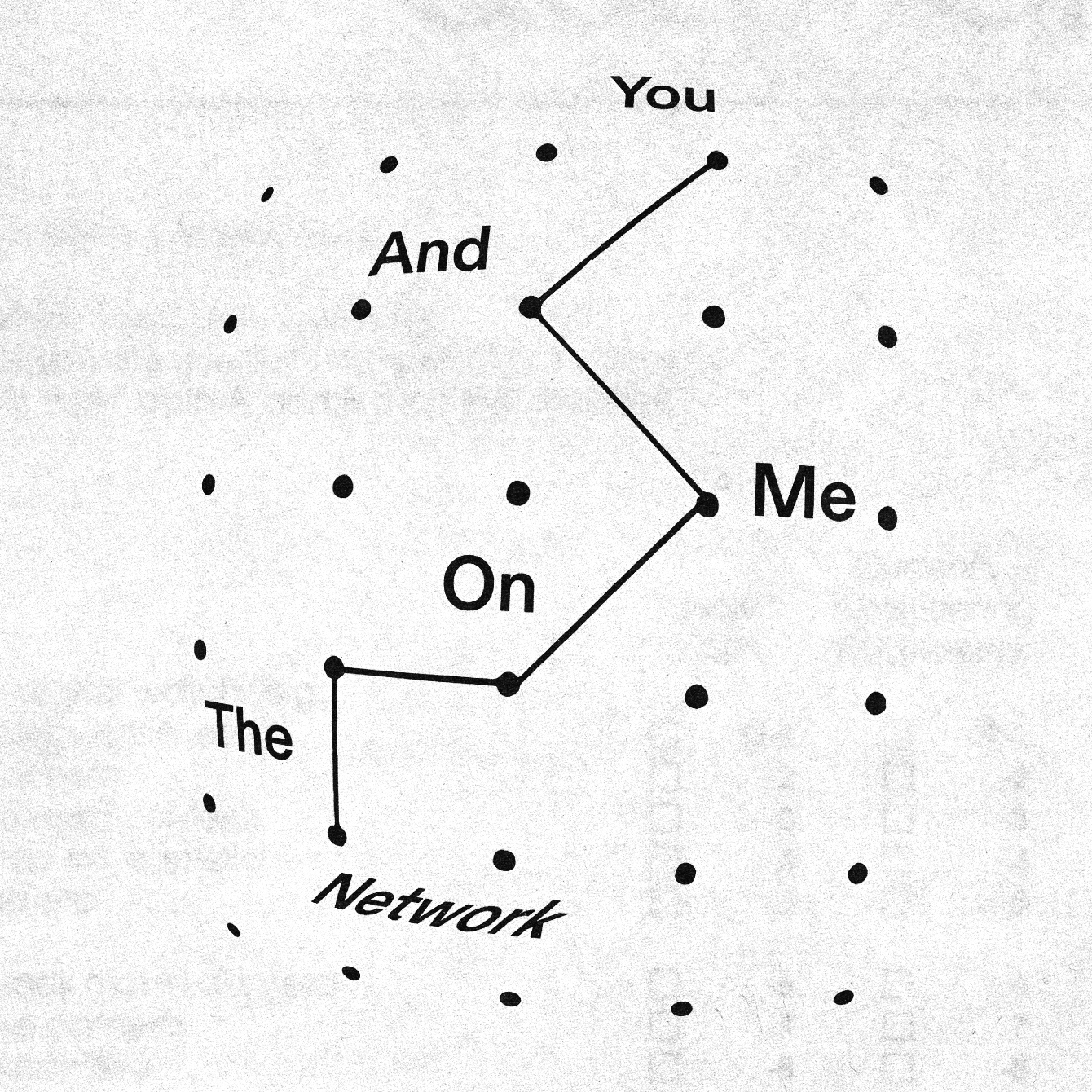 Urbit promotional graphic designed by Romina Malta.
-
My invocation of the term “technofeudalism” here refers to the work of that name by Yanis Varoufakis, which argues that mainstream internet platforms operate more like feudal lords than competitive market entities, as well as to Nathan Schneider's indictment of “implicit feudalism” as the default, anti-democratic design principle structuring online platforms. See Yanis Varoufakis, Technofeudalism: What Killed Capitalism (Brooklyn, NY: Melville House, 2024); Nathan Schneider, Governable Spaces: Democratic Design for Online Life (Oakland: University of California Press, 2024), 17-39. I will also point, here, towards other critical scholarship that explores the problems with the present-day internet through a political-economic and/or decolonial lens: see Tiziana Terranova, “Free Labor: Producing Culture for the Digital Economy,” Social Text 18, no. 2 (2000): 33–58, https://muse.jhu.edu/pub/4/article/31873; Mike Pepi, Against Platforms: Surviving Digital Utopia (Brooklyn: Melville House, 2025); Kate Crawford, Atlas of AI: Power, Politics, and the Planetary Costs of Artificial Intelligence (New Haven London: Yale University Press, 2021); and Jonathan Beller, The World Computer: Derivative Conditions of Racial Capitalism, Thought in the Act (Durham: Duke University Press, 2021) – just to name a few. ↩︎
-
Donna Haraway, “Situated Knowledges: The Science Question in Feminism and the Privilege of Partial Perspective,” Feminist Studies 14, no. 3 (1988): 575, doi:10.2307/3178066. ↩︎