Peak of Inflated Expectations
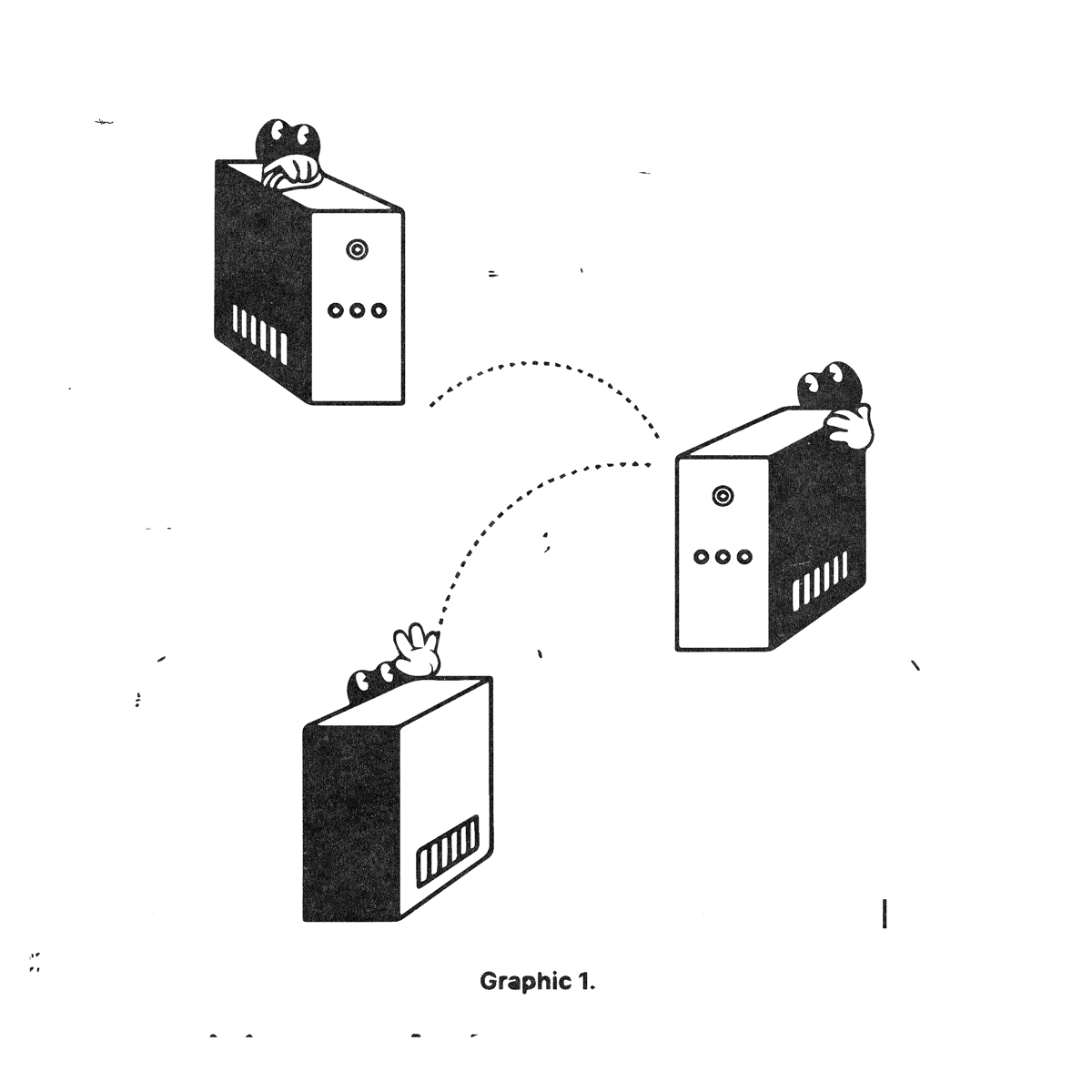 Urbit promotional graphic designed by Romina Malta.
Urbit’s sweeping vision for re-inventing the internet started with a Berkeley computer science PhD dropout named Curtis Yarvin. Yarvin began Urbit’s earliest design sketches in 2002, modeled in some ways on the early online social spaces he adored, like Usenet and Bulletin Board Systems. Fascinatingly, Urbit pre-dates Web 2.0; while its recent branding has positioned it as a rejoinder to platform capitalism, the idea for the project reaches back to the time before MEGACORP had grown to dominate the internet. Yarvin observed that mainstream operating systems had not been designed with the use-case of networked computing in mind, and set out to solve this problem from scratch in the early 2000s. He worked on Urbit in isolation until 2013, when he co-founded Tlon Corporation, a startup, to accelerate Urbit’s development. His co-founder, Galen Wolfe-Pauly, was a Cooper Union-educated designer with ties to the New York art world; unlike Yarvin, Wolfe-Pauly was “good at throwing parties,”1 instrumental in reaching the cool-kid user base they hoped to attract as the network grew.
While Urbit is notionally an open-source software project built under a MIT license, a number of its key components, including the dominant user interface and messaging services, were largely developed by Tlon. By 2016, Urbit had a website; the following year, they formally launched the network by deploying an Ethereum smart contract where identities on the network were sold as NFTs. The sale of address space helped capitalize the project, as did investments from major Silicon Valley venture capital firms including Andreessen Horowitz and Peter Thiel’s Founders Fund.2
Yarvin left the project abruptly in 2019. The Urbit Foundation, a nonprofit entity, spun off from Tlon in 2021, following the common model of many open-source software projects. The relationship between Tlon and the Urbit Foundation is unclearly defined – but with Yarvin off the project, they existed in apparent harmony, united by the shared goal of building a More Beautiful Computer.
Tlon released Urbit’s first graphical user interface, called Landscape, in 2020. Its design was sleek, reminiscent of Apple or the Bauhaus, inspired by the “timeless way of building” theorized by the architect Christopher Alexander.3 With Landscape, users could easily access an instant messenger, a bible-verse-a-day app, a radio station, and a forum with subsections for interests ranging from archive fashion to esoteric health hacks. Whereas gaining access to the network had once been an arduous and code-intensive process, Landscape made Urbit accessible to “non-technical” users, making it possible to launch a “planet” without much knowledge of the command line. In view of this wider-spread usability, the Urbit Foundation positioned Urbit as a platform for publishing and monetizing creative work, reaching out to artists and writers.4 Appealing to “non-technical” users (a category I belonged to, and a turn of phrase I take some issue with5), Tlon continued development of tools geared towards lowering barriers to entry. Urbit parties became a feature of the downtown New York arts scene.
Countless blogs, including a short-lived one by “alt-lit” enfant terrible Honor Levy, sprang up on the network, though the exact way in which Urbit supported monetization for cultural creators was unclear. Most of the appeal was speculative: a promise of emancipation, underwritten by the fact that Urbit did not actually work that well, which must have meant that it was noble to use. An Urbit-native literary magazine, called the Mars Review of Books, launched on the network. One summer, they put out a “swimsuit issue” featuring e-girls with nyms like Bronze Age Shawty and Bimbo Umerbensch sporting bikinis designed by Patricia Torvalds, daughter of the creator of Linux. Eventually, the Mars Review realized that they could preserve their niche of covering Urbit-adjacent culture without the frustrations that attended to publishing exclusively on Urbit and proceeded to launch a Substack.
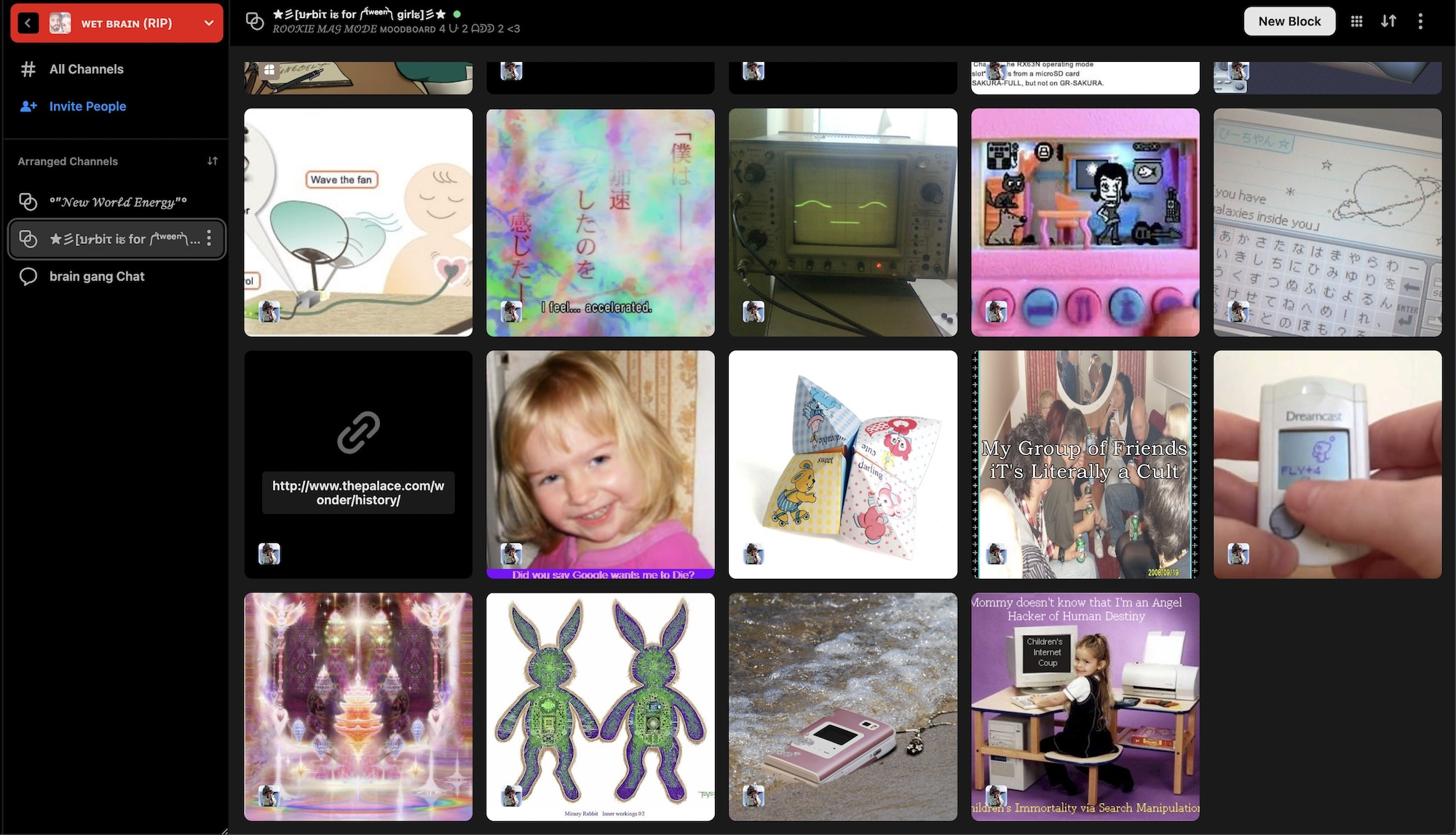 Screenshot of Honor Levy's "Urbit is for Girls" blog on Urbit as viewed in the Landscape interface.
While Urbit had made apparent progress towards its lofty aspirations, Landscape did not always function. The network went down frequently for no clear reason. Onboarding was easier, but still ponderous. Forums loaded slowly and posts were slow to publish. Posting an image required patience and faith. Urbit’s marketing strategy ingeniously positioned this friction as a charming feature of alternative networking, opposed to the seamlessness of MEGACORP services.
By the summer of 2022, Urbit’s name was everywhere in the highly-online niches I occupied. I was living in Berlin and writing a column about “internet culture” for an art magazine, regularly encountering artists and writers whose interest in alternative networks led them, in a similar fashion to mine, towards Urbit. This era coincided with Yarvin’s break from the project. I was ambiently aware that Yarvin had a bad reputation but admittedly gave little thought to the matter. If anything, the aura of transgression surrounding the project excited me. That Yarvin’s personal politics might have informed this More Beautiful Computer’s design philosophy or network structure did not really occur to me. I was, in that moment, so hungry for a functional alternative to the MEGACORP internet that I not only let myself be seduced by Urbit’s vision, but participated in spreading its gospel.
One day I read that the Urbit Foundation was looking for “collaborators.” I was bored, lonely in Berlin and bereft of intellectual stimulation. So I booted my planet and DM’ed Josh Lehmann, the Foundation’s CEO. Lehmann noted that my jankily self-hosted planet was not constantly connected to the network and traced my Urbit to my Twitter to my email. Despite my technical ineptitude and indefensible OpSec, he wrote me to set up a meeting. Subject line: “Discuss brand strategy & communications for the UF.” In a series of meandering Zoom meetings (Urbit-native video conferencing software was not in the cards), we spoke of the delicate balance of growing an online community; the desire to build experimental tools for self-publishing; and the goodness of having sovereignty over one’s stack.
The reality of my experience of this high-agency tool for human-scale computing was more checkered. I had been self-hosting my Urbit planet on my personal laptop; at that time, this was relatively simple thanks to a service called Port. Only a couple of commands copy-pasted into the Terminal were required for me to launch my planet onto the network; after that, Port was navigable directly through the GUI. I was shaky, scared of the command line. I had never self-hosted anything before. My planet was offline whenever my laptop was shut, hence Lehmann’s circuitous path to making contact. I took this less as a technical challenge worth overcoming (for instance, by learning how to run a lightweight home server) than as a calculated rejoinder to the expectation of constant uptime that existed on the default internet. Dissonance repressed, I was ready to evangelize.
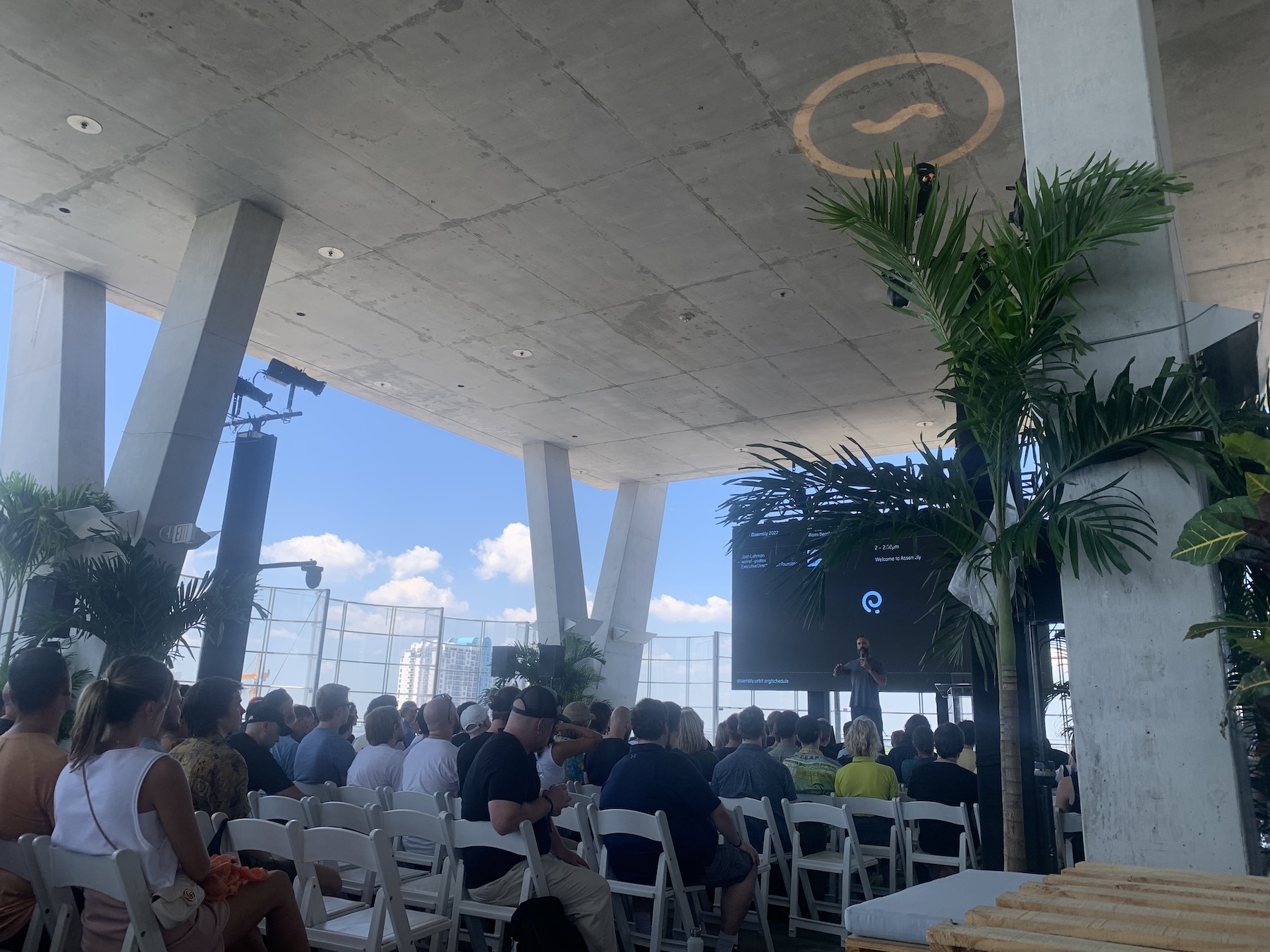 Urbit Assembly, 2022.
That fall, the Urbit Foundation offered to fly me out to Miami for their annual Assembly, which I agreed to cover for the art magazine that I edited. The conference’s theme was “New World Energy.” It was held in a Brutalist carpark designed by the Swiss architecture firm Herzog & de Meuron. Upon check-in, I was granted a wristband that said: URBIT ASSEMBLY ~ TAKE A WALK ON THE BEACH AND DRAW A HEART IN THE SAND. Exactly 1,000 oranges sat stacked in pyramids on coffee tables scattered through the space. Allegedly, the access key to an Urbit galaxy, the most valuable tier of address space on the network, was hidden within one of their peels. A plane flew over the parking garage, trailed by an advertising banner that read: A PLANET IS WAITING FOR YOU WHEN YOU’RE READY.
Lehmann’s opening address at Assembly struck all the notes that had initially drawn me to Urbit. He explained that Urbit would “make computers personal again” by building a private interface to draw together the fragmented archipelago of platforms and accounts – “services to manage our services” – that make up the extractive and surveilled experience of being online today.6 I nodded along as he spoke, tanned and charismatic on the temporary stage. A cocktail waitress materialized in my peripheral vision and handed me a complimentary marg. I fell into a sleepy reverie fantasizing about my exodus from MEGACORP, my sojourn into sovereignty.
Other conversations that weekend sat somewhat less easily with me. The podcaster Justin Murphy moderated a panel called “Forking the American Codebase,” calling for tech startups to build expat colonies in Latin America. Balaji Srinivasan, the former CTO of Coinbase, spoke about his book The Network State, encouraging Urbit users to start new associations, and eventually physical countries, of un-taxable tech elites. Charlotte Fang, the “cult leader” of controversial NFT project Remilia Collective, tried to share his insights on launching a wildly successful memecoin but could not organize his thoughts quite clearly.
At the afterparty that evening, hosted in a crypto millionaire’s sparsely-furnished mansion, rumors circulated that Fang had mismeasured his intended LSD microdose that morning. The mansion’s owner went by the pseudonym Backus, in homage to John Backus, the inventor of FORTRAN. I mistakenly heard it as Bacchus, as in, Greek god of religious ecstasy and ritual madness. I floated through the bacchanalian environment, throwing back Moscow Mules and chatting with VCs about the writings of Nick Land.
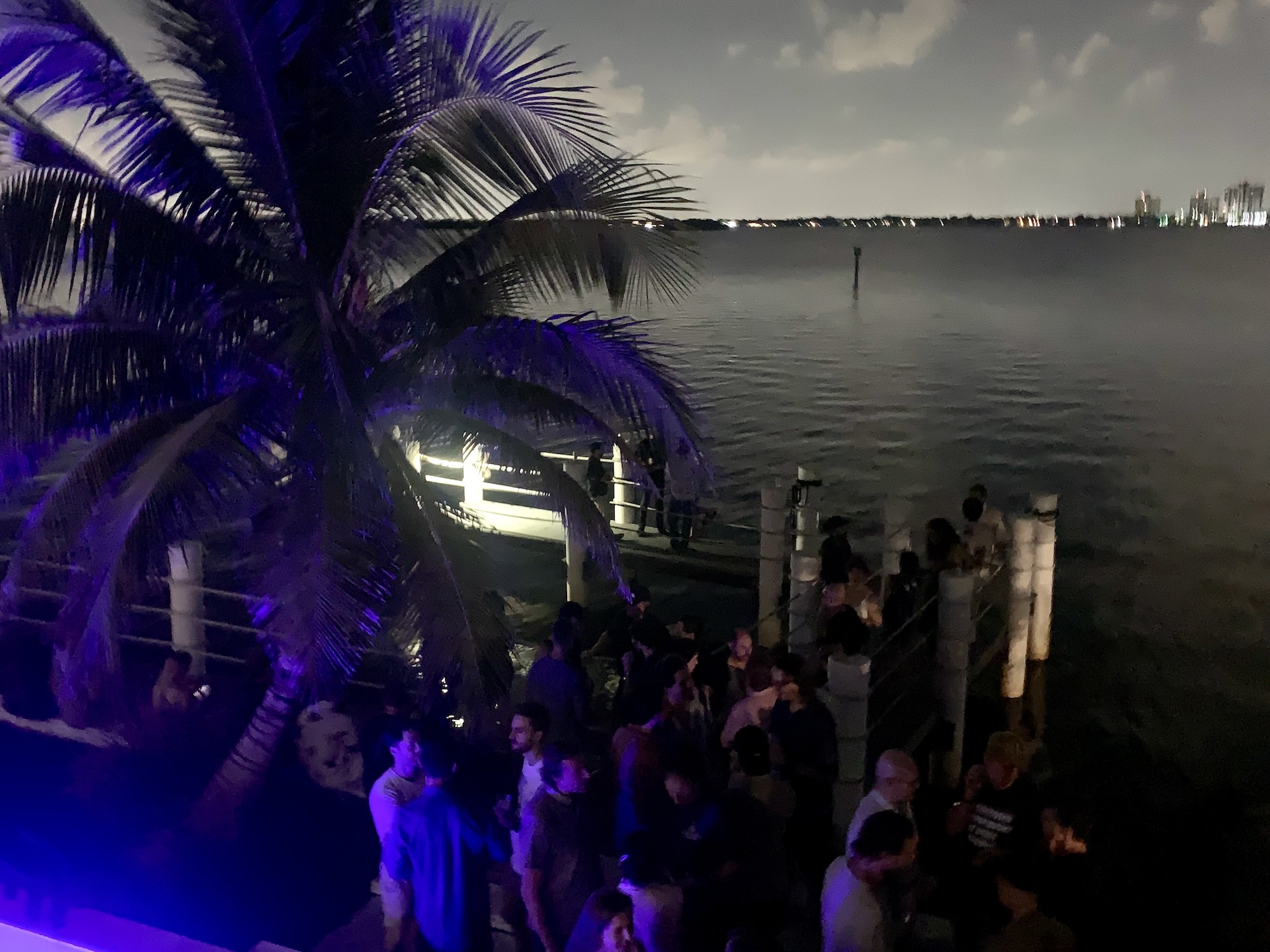 Urbit Assembly afterparty, 2022.
Land was an O.G. in the loosely-organized group of researchers at Warwick University in the ‘90s that called themselves the Cybernetic Culture Research Unit (CCRU). Affiliates included Kodwo Eshun, Mark Fisher and Sadie Plant, whose cyber-utopian thought took up Marxist, feminist, and Afro-futurist leanings. Land, on the other hand, soon veered to the political right – developing increasingly racist and anti-human philosophical positions under the mantle of “accelerationism” before retreating to self-imposed exile in Shanghai.
One of the CCRU’s most enduring cultural outputs was the idea of “hyperstition”: the process of once-fictional narratives instantiating themselves into real existence. Positive feedback loops; belief building until new truths crystallize out of social fictions. Hyperstition is, in a sense, foundational to Urbit’s rise. A radical reimagining of presently-available technology grafts itself into reality piece by piece; as it describes a future, it also brings it into being. Tlon, Uqbar, Orbis Tertius.
I wore my Cybernetic Culture Research Unit T-shirt to Assembly and rapidly encountered someone else sporting the exact same one. He told me he had just returned from Prospéra, a special economic zone and self-described “startup city” in Honduras, where he received experimental gene therapy treatments – not approved by the U.S. FDA – in hopes of becoming immortal. I stayed up all night partying with the core devs, doing karaoke and swimming in the ocean. I filed my piece on Assembly at the airport, fighting through vague nausea, hungover from collective effervescence and complimentary alcohol. I had penned a measured critique of “New World Energy,” afraid of drawing ire from the Foundation after they bankrolled my working vacation.7
On the flight back to Berlin, I drifted in and out of fitful sleep, occasionally awoken by thoughts of post-national sovereignties and temperate tax shelters, ads for citizenship by investment in Antigua playing on the inflight entertainment system. My dreams were disconcerting, the phrase Tlon, Uqbar, Orbis Tertius repeating in my mind like an incantation. Writing as an act of bringing-into-being; description as a dare, a wager, a hyperstitional time-twisted vector entangling past and future. What new worlds was I seeding by writing about Urbit? What techno-fictions was I conjuring into existence?
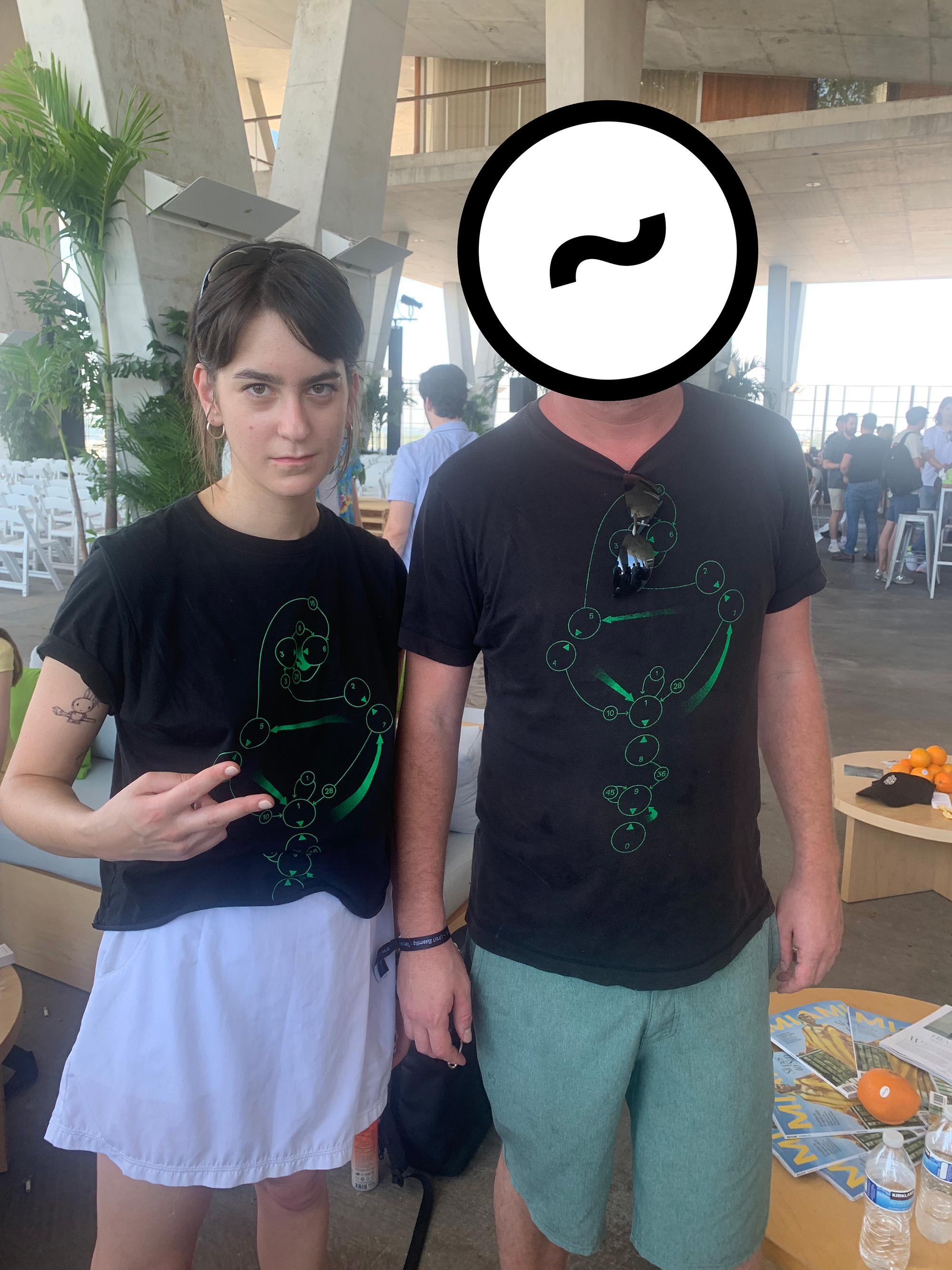 The author and a fellow Urbit Assembly attendee in matching CCRU shirts, 2022.
NEXT →
-
“Curtis Yarvin’s First Wartime Address (Live),” August 23, 2024, https://www.youtube.com/watch?v=ltLiGb5CoQs&ab_channel=Urbit. ↩︎
-
Colin Lecher, “Alt-Right Darling Mencius Moldbug Wanted to Destroy Democracy. Now He Wants to Sell You Web Services,” The Verge, February 21, 2017, https://www.theverge.com/2017/2/21/14671978/alt-right-mencius-moldbug-urbit-curtis-yarvin-tlon. ↩︎
-
Assembly 2022 | Urbit Core Development: The Timeless Way of Building, Panel recording, Urbit Assembly 2022 (Miami, FL, 2022), https://www.youtube.com/watch?v=RIMJ0kZM1DY. ↩︎
-
Isaac Simpson, “The Dream of the Agency DAO,” urbit.org, Urbit Blog, (November 4, 2022), https://urbit.org/blog/agency-daos. ↩︎
-
While it is true that I had limited technical experience when I started using Urbit, the designation of “non-technical user” upholds a hierarchy that privileges those who code over those who don't, failing to acknowledge the multitude of intelligent ways that people with varying experiences interact with technology. As a rejoinder, I like the provocation from Melanie Hoff that “everyone who interacts with computers has in important ways always already been programming them.” ↩︎
-
Assembly 2022 | Opening Talk: Make Computers Personal Again (Miami, FL, 2022), https://www.youtube.com/watch?v=zDuaGi6Jbrk&t=1s. ↩︎
-
Adina Glickstein, “User Error: A More Beautiful Computer,” Spike Art Magazine, October 4, 2022, https://spikeartmagazine.com/. ↩︎